
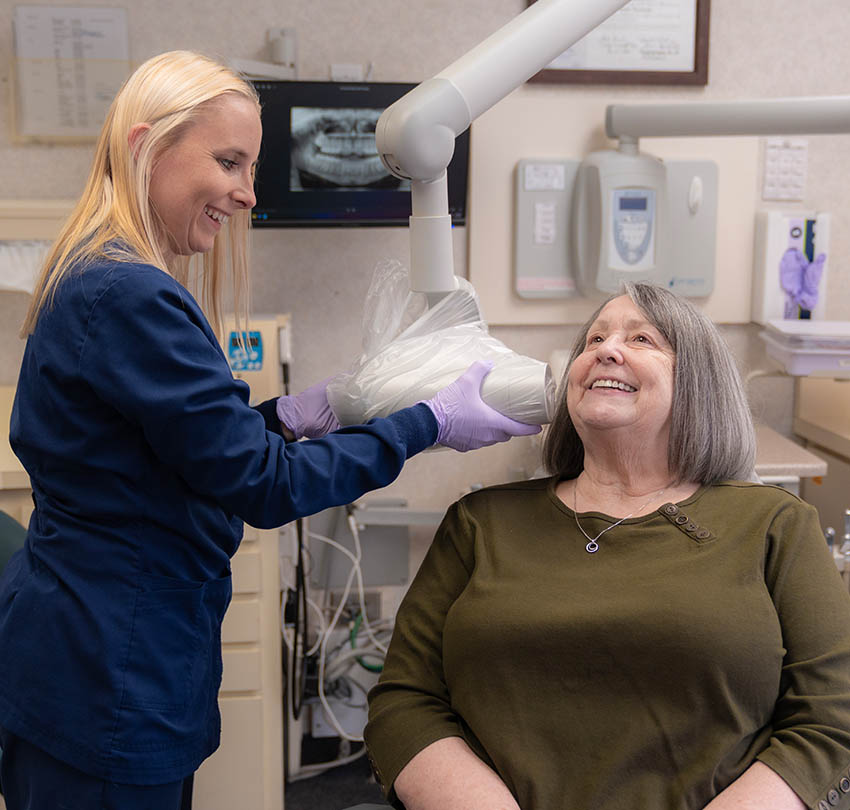
We typically, but not always, it’s patient dependent, we will put a photo of what their mouth looks like when they walk in the door up on a screen in front of them. And the patient can see the tartar that’s built up maybe behind their lower front teeth or someplace like that. Or if they have a broken restoration or chipped a tooth or something, maybe we’ll put a picture of that up.
That helps the patient visualize, okay, here’s what we’re seeing. So we have a problem. How are we going to solve that problem? And we use those intraoral cameras to literally explain anything.
We believe in pictures and photography. So it’s a big deal. This picture’s worth a thousand words, and it really truthfully is.
Most people learn by seeing it, not by hearing it. So we use that photography to our benefit and hopefully to the patient’s benefit, because it’s all about the patient, it’s not all about us. Using that and explaining what we’re finding, what we can do to fix it, and we can show them examples of certain kinds of dentistry if they need to see that as well.
I think they’re pretty much set up for the conversations with me later on by the information that was given them by the hygienist.